
As Halloween approaches, thoughts naturally turn to ghost stories, vampires and things that go bump in the night.
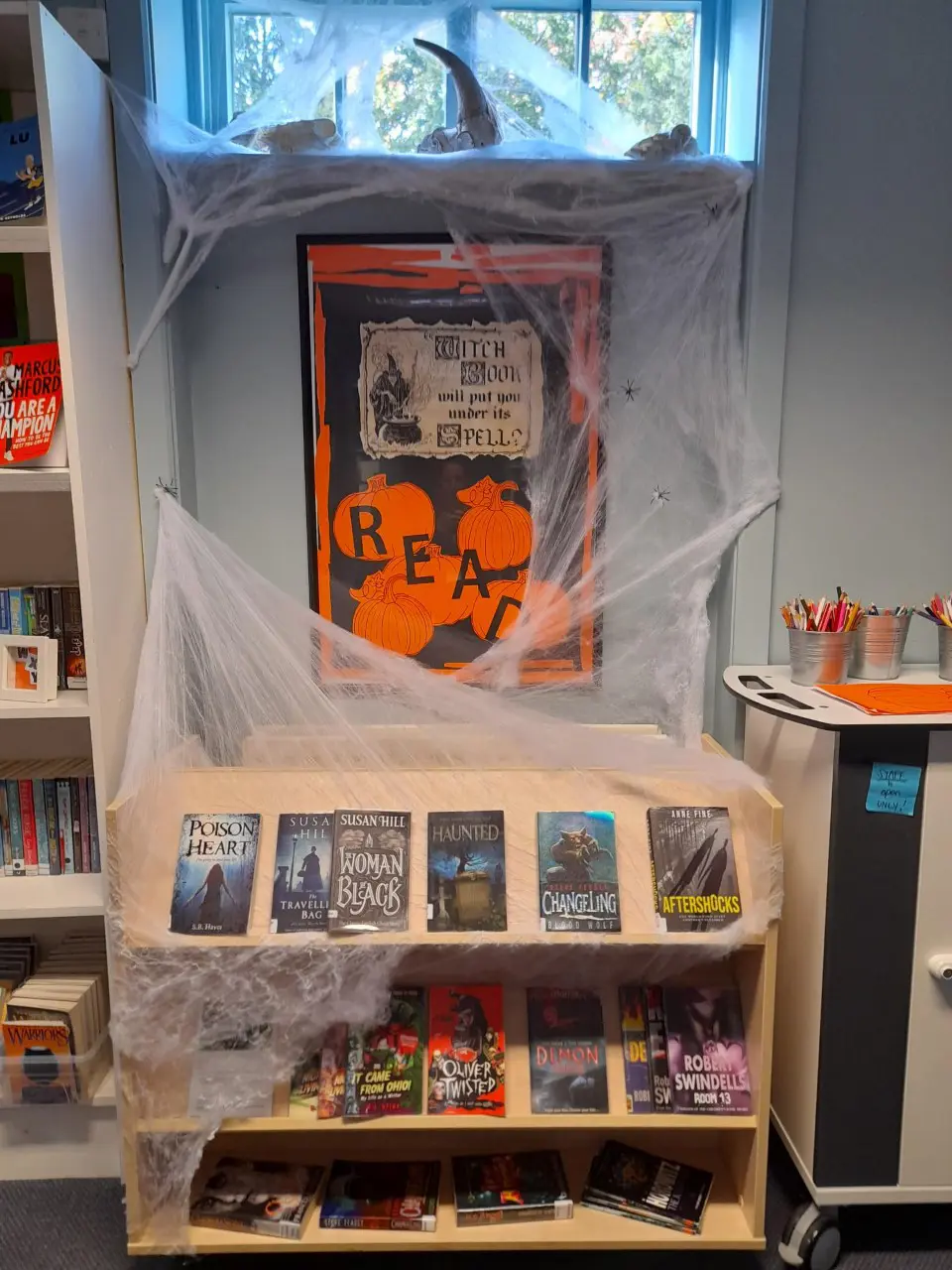
For this National Year of Reading blog, Ms Tugby explores her love of horror fiction, challenging common misconceptions about the genre and sharing why some of the most moving and memorable stories can be found within its pages.
I’ve always enjoyed the occasional looks and comments I receive when telling people horror is my genre of choice for reading. Be they friendly bookshop employees, or maybe even people I’ve worked with.
“I would never have guessed that of you!”
“But you’re always so calm and quiet!”
Maybe it’s the feeling of defying someone’s first impressions of me, or making someone realise they don’t know me quite as well as they thought. What’s that saying about not judging something by its outward appearance?
But while I have always taken these comments with genuine humour, the reality of someone changing their opinion of me based on the books I read is a perfect example of how horror can still be a misunderstood genre in the literary world. As is the case with video games of the same nature, there is a long-held misconception that those who consume violent content will ultimately have the urge to bring that same violence into their real lives. Vilifying the genre and, by extension, those who read it is ultimately unfair on some of the most exciting and engaging authors working today, writing some of the most genuinely heartfelt books.
The lasting appeal to horror, in any format, is controlled fear. We enter into the experience knowing we will be scared, but also with the assurance that we are completely safe. A cinema-goer getting caught off-guard by a jump scare in a film is swiftly followed by nervous laughter, the hit of dopamine that comes with the relief of knowing the danger isn’t real. It’s putting ourselves in the characters’ shoes, imagining how we would behave and react in their situation, but knowing we will never actually have to. We can relax in our comfy reading spot, safe in the knowledge that the horror will never leave the confines of the pages we’re holding.
As a naturally anxious person, reading horror actually helps to quell some of the negative feelings that can often surface in my day-to-day life. It can be a means of escape, losing myself in another world and focusing on the lives of the characters on the pages rather than my own. But it’s also another way to take that controlled fear and use it to my advantage. To compartmentalise my worry. For the time I’m reading, I can agonise over the plight of the characters as much as I want, and it stops me panicking as much outside of my reading time. It can also put the silly little things I needlessly dwell on into perspective, albeit to the extreme. So what if I made a tiny mistake at work that I keep replaying over and over? At least I’m not in the middle of a zombie apocalypse!
As with any novel, the secret to a good story is the storyteller behind it. Making the reader live every moment on every page is a difficult task in any genre, but even more so for horror writers. Any author worth their salt can elicit a chuckle or move us to tears, but it takes a real talent to genuinely frighten or unnerve someone through words and imagery alone. If you can make someone cringe, make them wince, have them squirming in their seat or holding their breath until the end of the chapter, that’s when you’ve achieved something special. I remember a passage in Grady Hendrix’s ‘The Southern Book Club’s Guide to Slaying Vampires’ doing all of these so brilliantly. It’s a scene I pictured so vividly whilst reading it, and it’s still stuck with me years later.
But there is usually so much more depth to a horror novel than just terrifying the reader. More often than not, horror authors are still having to tap into all the other emotions that make a book worth reading, on top of providing a good scare. Because whether we enjoy a book or not is largely down to the characters and our connection to them. We want protagonists that we can see ourselves in, that we can cheer for. Particularly in horror books, we want a final girl that prevails in the end against all the odds. Or maybe a villain who is so well-written, so fun to hate, that we would rather see a twist in the tale that denies us a happy ending. If we have no investment in the characters and what happens to them, the stakes aren’t as high. The scares aren’t as effective. Two of my favourite books – ‘My Best Friend’s Exorcism’ by Grady Hendrix, and ‘Dweller’ by Jeff Strand – had me reaching the end of the final page, placing the book down, and silently crying to myself for a few moments. Amongst all the horrors that take place in both stories, at the core of each is a beautiful friendship that stays with you long after the closing line. The connection you feel to the characters in both novels is instant and steadfast, which makes everything they endure all the more moving.
I understand the divisiveness of the horror genre. It isn’t for everyone, which I respect. But if you can withstand a little blood or the odd demon or two, there are some fantastically exhilarating, emotional, and truly wonderful stories out there waiting to be read. And if a book outside of your comfort zone calls to you, listen to it. Take a risk. Pick it up. Ignoring that call may lead to you missing out on some of the best novels you’ve ever read. Now, that would be scary.